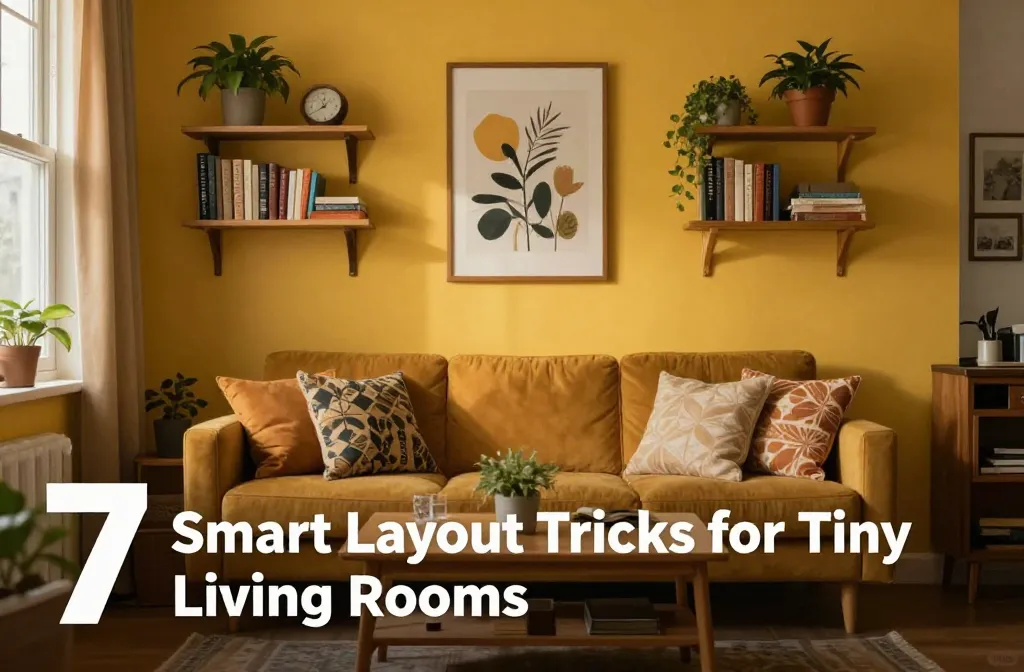
Small living room giving you big drama? Same. The trick isn’t buying a bigger sofa—it’s playing Tetris with what you’ve got. With a few layout moves, you’ll squeeze in seating, storage, and style without turning your space into an obstacle course. Ready to outsmart your square footage?
Start with a “Hero Wall” and Build Around It
Pick one wall to anchor the room, then make every choice point toward it. That could be the TV wall, a fireplace, or a big window. When you commit to a hero wall, your layout stops guessing and starts making sense.
How to pick your hero wall
- Use the wall opposite the entry so your eye lands somewhere calm when you walk in.
- Choose the wall with the least chaos (no doors, no awkward vents) for your main piece—usually the sofa or media unit.
- Borrow symmetry: two identical lamps or art pieces flanking the hero area instantly tidy the look.
Scale Down the Sofa (But Keep the Comfort)

Big sofa in a small room? That’s a visual hog. Choose a slim-armed, bench-seat sofa around 72″–80″ and pair it with a compact lounge chair. You’ll still flop comfortably—just without the furniture bloat.
Sofa shapes that play nice
- Armless or track-arm sofas save inches and look clean.
- Apartment-sized sectionals with a chaise on the narrow side give you stretch-out space without swallowing the room.
- Leggy bases (visible legs) keep the look airy, unlike bulky skirts.
Float the Furniture—Don’t Hug the Walls
Counterintuitive, yes. Effective, absolutely. Floating your sofa 6–12 inches off the wall creates a natural walkway and makes the room feel layered instead of flat. You’ll also stop that awkward “everything lines the perimeter” look that screams dorm room.
Micro-zoning in a tiny space
- Create a clear path from the entry to the seating area so no one stubs a toe at 2 a.m.
- Use the back of the sofa as a boundary for a small console or slim desk—hello, stealth workstation.
- Angle a chair slightly toward the room’s center to soften a boxy layout.
Pick a Rug Like You Mean It

Your rug decides the conversation zone. Too small, and everything looks cramped. Aim for a rug large enough that front legs of all seating sit on it. That anchors the layout and stops your pieces from feeling like they’re drifting.
Rug rules you won’t hate
- Size up: in most small rooms, a 5×8 is too tiny. Go 6×9 or 8×10 if you can.
- Go low-pile or flatweave so doors clear and chairs don’t catch.
- Keep it cohesive: subtle pattern = spacious vibe. Bold is fine, but don’t make it a dizzying maze.
Use Double-Duty Pieces (Your Future Self Will Thank You)
Tiny living rooms can’t afford one-trick furniture. Choose pieces that moonlight as storage, extra seating, or surfaces.
Smart multitaskers
- Nesting tables that fan out for guests and tuck away after.
- Storage ottoman that holds throws and becomes a coffee table with a tray on top.
- Lift-top coffee table for dining or laptop duty—great for WFH days, IMO.
- Wall-mounted shelves over the sofa or TV for books and decor without a footprint.
Play Vertical—Your Ceiling Wants In

If floor space feels tight, look up. When you draw the eye vertically, the room reads taller and calmer. It’s design magic, minus the wand.
Easy height tricks
- Hang curtains high and wide—mount them close to the ceiling and extend them past the window frame to fake bigger windows.
- Use a tall, narrow bookcase or a stacked set of wall shelves to pull weight off the floor.
- Lean a large mirror opposite a window to bounce light and stretch the sightline.
Dial In the Pathways (Or: Stop Tripping Over Things)
Small rooms work when you protect movement. Think of your layout like a mini city: roads matter. You need 24–30 inches of walkway space around the main seating path so people can move without doing the sideways shuffle.
Clear the chaos with these moves
- Round coffee tables make tight layouts easier to navigate than sharp rectangles.
- Use wall sconces instead of floor lamps where space pinches—FYI, plug-in sconces exist and they’re lifesavers.
- Corral remotes, chargers, and coasters in one tray so surfaces don’t look like a tech yard sale.
Balance the Visual Weight
You don’t need everything tiny—just evenly distributed. Mix one substantial piece (like a solid sofa) with lighter neighbors (glass or open-base tables) so the room doesn’t sink on one side.
Light vs. heavy: your cheat sheet
- Pair closed storage (media cabinet) with open elements (slim-legged chair) across from it.
- Use color strategically: darker pieces “weigh” more visually, so spread them out.
- Keep tall items (plants, shelves) on opposite sides to frame the room rather than lopsiding it.
FAQ
Can I use a sectional in a tiny living room?
Yes, but choose an apartment-sized sectional with a chaise, not a giant L-shape that eats corners. Keep the arms slim and the base leggy. Place it so the chaise defines your zone rather than blocks your path.
Where should I put the TV without dominating the room?
Mount it on the hero wall and keep the console narrow. If you rent, a low-profile stand still works—center it, then balance with art or shelves so it doesn’t scream “giant black rectangle.” A frame-style TV blends even better, IMO.
How many seats can I realistically fit?
Aim for 4–5: a compact sofa (2–3 seats), one lounge chair, and a pull-up stool or ottoman. Stash a lightweight accent chair nearby (entry, bedroom) you can grab when friends show up. Flexible beats crammed every time.
Do I need a coffee table or can I skip it?
You can skip it if traffic feels tight, but give yourself surfaces. Try two small nesting tables or a storage ottoman with a tray. If you keep a coffee table, choose round or oval to ease the flow.
What colors make a small living room feel bigger?
Lighter walls bounce light, but don’t fear contrast. Use light walls, mid-tone upholstery, and dark accents for depth. Add one bold color in pillows or art so the room feels intentional, not washed out.
How do I handle lighting in a small room?
Layer it. Combine a ceiling fixture, a task lamp by the sofa, and a wall sconce or two. Keep shades light or linen so the glow spreads, and put lamps on dimmers so the vibe shifts from “Zoom call” to “movie night” fast.
Conclusion
Tiny living rooms don’t need massive overhauls—they need smart layout calls. Anchor one hero wall, scale the sofa, float your pieces, and respect the pathways. Use vertical space, double-duty furniture, and a rug that actually fits. Do that, and your small room stops apologizing and starts flexing. And yes, you can still stretch out for a nap—no judgment.