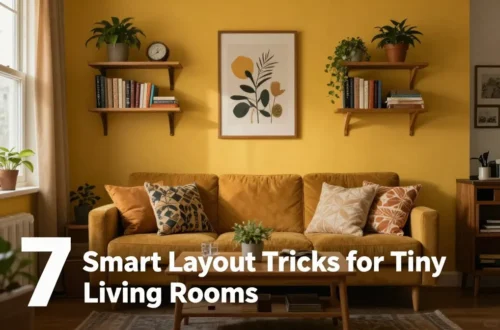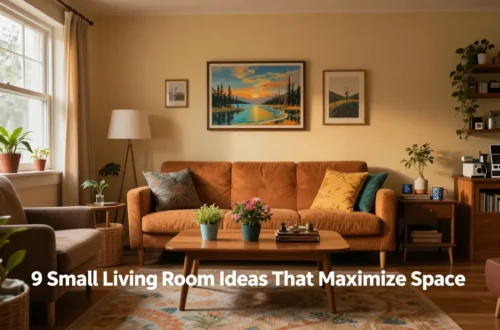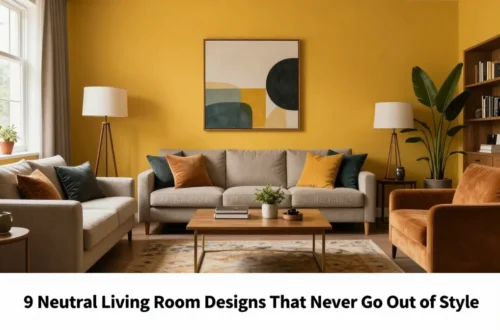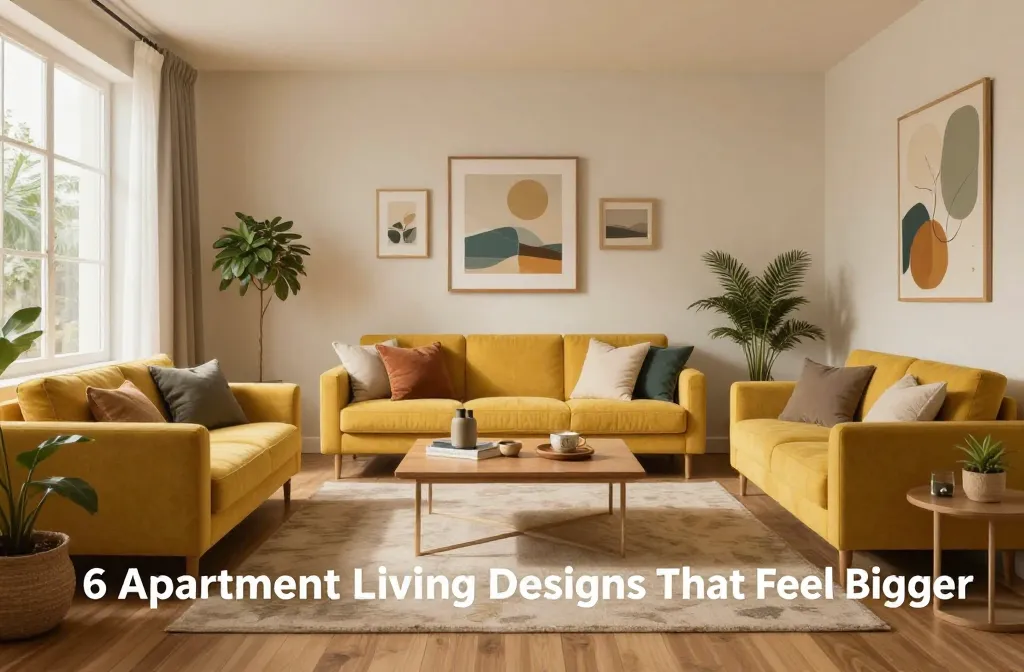
Small living room, big dreams? Same. You don’t need to knock down walls or bribe your landlord to make your apartment feel larger. With a few smart layout tweaks and sneaky design moves, you can turn a cramped box into a space that breathes. Ready to make your living room feel twice its size without spending twice your rent? Let’s go.
Rethink Your Layout (Then Rethink It Again)
You can’t change your square footage, but you can change how your furniture works with it. Start by pulling furniture off the walls—yes, even that sofa. Giving pieces a little breathing room creates the illusion of flow.
Try these layout strategies:
- Float your sofa with a narrow console or slim bench behind it. This defines zones and keeps walkways clear.
- Angle a chair toward the center instead of lining everything up like a waiting room.
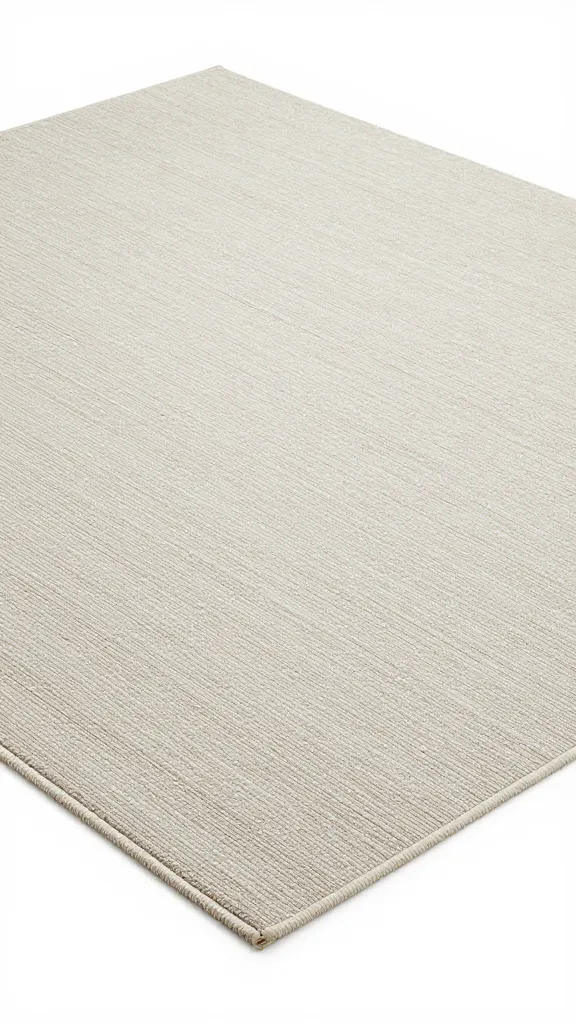
- Use a rug to anchor the seating area. Go bigger than you think—the rug should touch at least the front legs of each piece.
- Keep pathways straight. If you weave around furniture to reach the kitchen, your space feels cramped.
Zone Like a Pro
If your living room doubles as an office or dining spot, define areas without adding bulk.
- Use a low bookcase as a divider between lounge and work zones.
- Place a floor lamp to “mark” the reading corner instead of adding another chair.
- Rotate your rug to align with the main seating zone, not the room’s longest wall.
Scale Down (But Don’t Go Tiny)
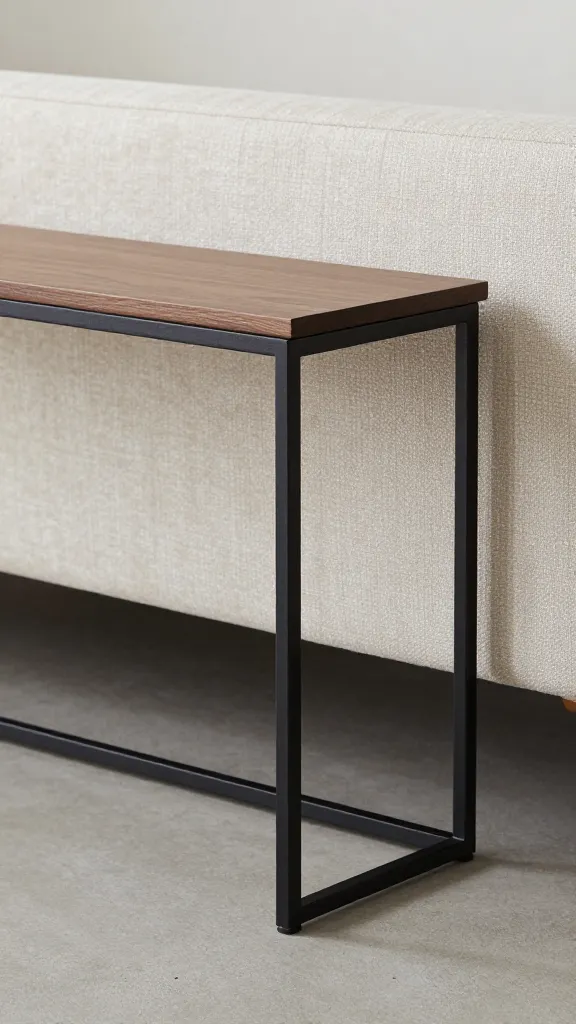
People often shrink everything, and then the room looks like a dollhouse. Not the vibe. Choose fewer, well-scaled pieces instead of lots of small ones.
What to prioritize:
- A compact sofa with visible legs. That air space underneath tricks the eye and feels lighter.
- Armless or low-profile chairs to avoid visual clutter at eye level.
- One substantial coffee table instead of two small ones bumping around like confused Roombas.
- Tall, slim storage over squat, wide pieces. Vertical lines read as spacious.
Furniture to Skip (IMO)
- Bulky recliners that eat corners for breakfast.
- Heavy chests used as TV stands—go wall-mounted when you can.
- Overstuffed sectionals unless they’re tailored and low-back.
Let Light Do the Heavy Lifting
Light equals space. If you can maximize natural light, you instantly win. If not, layer different light sources for that glow-up.
Lighting moves that expand a room:
- Hang curtains high and wide. Mount rods just below the ceiling and extend them beyond the window frame. More light in, taller walls, everyone claps.
- Swap heavy drapes for sheers or light-filtering shades. Save blackout for the bedroom.
- Use three lighting types: ambient (ceiling), task (floor/desk), and accent (sconces or table lamps). Variety adds depth.
- Mirror placement: Put a mirror across from a window (not next to it). Double the daylight, zero remodeling needed.
Ceiling Tricks
- Uplights and wall sconces push light upward and make ceilings look taller.
- Skip fussy pendants in very low rooms. Choose a flush or semi-flush fixture to keep headspace open.
Color, Contrast, and the Visual Magic Show
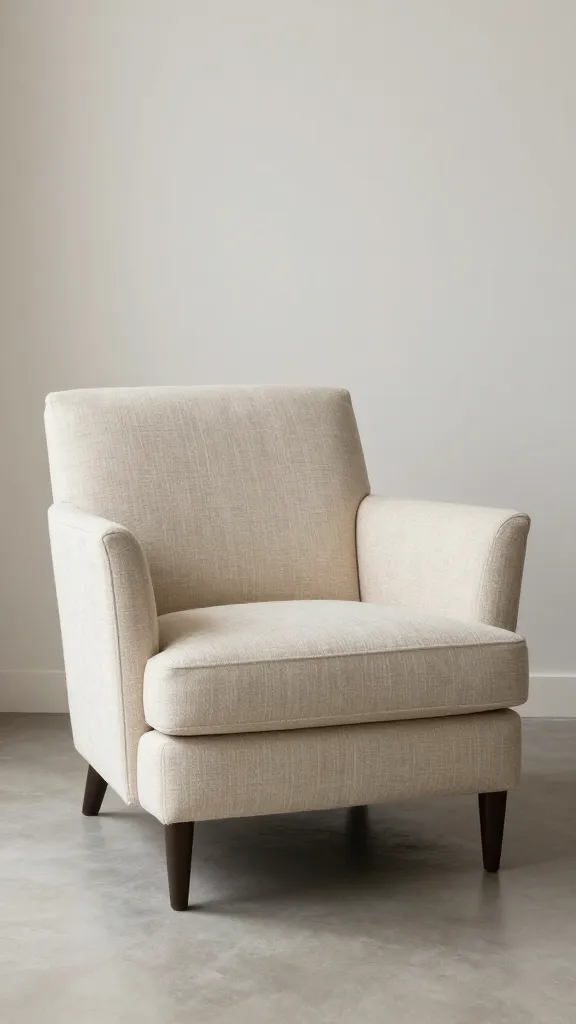
You can manipulate perception with color like a seasoned illusionist. Keep it light—but not boring.
Color strategies that work:
- Light, warm neutrals like soft beige, greige, or pale clay reflect more light and feel cozy, not sterile.
- Monochrome moments. Match your wall color closely to major pieces (like curtains) for a seamless, spacious vibe.
- High-contrast accents in small doses—pillows, art, a blanket—to avoid flatness without chopping up the room.
- Paint the trim to match walls. You remove busy lines and extend the wall visually.
Ceilings and Feature Walls
- Paint the ceiling a shade lighter than the walls for lift.
- Go tone-on-tone for a “cocoon” that feels continuous rather than boxed in.
- Vertical stripes (paint or wallpaper) add height. Subtle is best unless you love circus energy.
Storage That Hides Your Chaos
Clutter shrinks a room faster than anything. You can keep your stuff—you just need clever ways to make it disappear.
Smart storage ideas:
- Hidden-hero coffee table with drawers or a lift-top for remotes, chargers, and the random screwdriver you swear you’ll put away.
- Ottomans with storage double as seating and stash blankets or games.
- Wall-mounted shelves keep the floor clear so the room reads bigger at a glance.
- Closed storage for the messy bits, open for pretty things. Balance keeps it calm.
TV and Media Setup
- Mount the TV and run cords through a cable cover you can paint. Clean lines, no spaghetti wires.
- Use a narrow floating credenza for consoles and modems. It stores what you need without hogging floorspace.
Multi-Tasking Pieces (Because Your Living Room Has a Side Hustle)
Your furniture should earn its keep. If it only does one job, it better do it exceptionally well or it’s out.
Favorites that pull double duty:
- Nesting tables that spread out for snacks, then tuck away.
- Drop-leaf or gateleg tables for weekend dinner parties that disappear midweek.
- Slim desks that moonlight as consoles behind the sofa.
- Benches as coffee tables, footrests, or extra seating. Versatility = space efficiency.
Flexible Seating
- Lightweight accent stools you can move easily when friends show up.
- Floor cushions that you can stack in a corner and pull out as needed. Cozy without commitment.
Style With Restraint (But Not Boredom)
You don’t need to ditch personality—just curate it. Fewer, bigger statements make a room feel intentional and airy.
Decor that gives breathing room:
- One large art piece beats a chaotic mini gallery. Or keep a tight grid with generous spacing.
- Plants with height (like a fiddle leaf or olive tree) add life without eating floor space.
- Clear materials like glass or acrylic tables provide surface area without visual heft.
- Limit patterns to one or two. Mix scales if you must—small pattern on pillows, larger on the rug.
Editing Checklist (FYI)
- Remove one decorative item from every surface. Breathe. You won’t miss it.
- Group decor in odd numbers (3 or 5) to avoid visual noise.
- Leave empty space on shelves. Negative space equals mental space.
FAQ
What rug size makes a small living room look bigger?
Go larger than your instincts. Aim for a rug that allows the front legs of all seating to sit on it. A too-small rug chops the room into pieces and makes everything look like it’s floating awkwardly.
Should I mount my TV or keep it on a stand?
Mount it if you can. Wall-mounting reduces visual clutter, frees up surface space, and helps your eye read a cleaner silhouette. Add a floating shelf or narrow console for devices, and hide cords for the win.
Do mirrors actually make a difference, or is that a myth?
They work—when placed right. Put a mirror across from a window or a large lamp to bounce light and extend sightlines. Avoid placing mirrors where they reflect clutter or a blank wall; that just doubles the boring.
What colors are best if my room gets little natural light?
Choose warm, light tones like creamy whites, soft taupes, or pale blush-beige. Cool whites can look shadowy in low light, IMO. Add layered lighting and a few darker accents to keep it grounded.
How do I fit a sectional in a tiny living room?
Pick a low-profile, tight-back sectional with slim arms and visible legs. Keep it to two pieces (like an L) and pair it with a single accent chair or stools. If the sectional blocks pathways, it’s not the right one—comfort shouldn’t create an obstacle course.
What’s the fastest way to make a small room feel bigger on a budget?
Declutter like you mean it, raise your curtain rods, rearrange your layout, and add a big mirror. Those four moves cost little and deliver a major visual upgrade. Then, if budget allows, swap one bulky piece for a slimmer option.
Conclusion
Small doesn’t mean cramped—it means intentional. Choose lighter, taller, and multi-use pieces; let in more light; and keep your decor edited but personal. With a few smart changes, your living room won’t just feel bigger—it’ll actually work better. And honestly, that’s the real flex.